Graham Sharp, VP of Sales and Marketing at BCNEXXT explores how unified platforms, automation, and AI will reshape media operations in 2026, and why Vipe is built for this new era of efficiency and consolidation.
Efficiency and cost “re-alignment.”
When we founded BCNEXXT in 2015, we built the company on a clear vision: that the future of media would be unified platforms, intelligent automation, and containerized infrastructures that eliminate friction and increase business potential and profitability. This strategy was built on decades of experience and understanding in developing game-changing technology for media companies, and we knew beyond doubt that our solutions were the next generation. We just had to wait for the industry to catch up.
That moment is now here.
Over the past five years, the balance of power in the media industry has shifted. Technology companies have moved directly into the creative and content ownership landscape. Amazon’s acquisition of MGM, Apple’s deepening investment in original content, and ongoing interest from other tech giants like Google and Netflix have rewritten the competitive map.
Tech-led companies approach media as a systems-and-scale problem, not just a creative one. They are fluent in cloud, automation, AI/ML, platform engineering, and real-time analytics, and they bring that fluency to organizations that historically operated under legacy processes, siloed infrastructures, and manual workflows.
Their worldview is simple: Technology is the engine of efficiency, agility, and long-term profitability. And fundamentally, it's a very different philosophy.
The next phase of media transformation will be defined by tech-forward leadership demanding unified platforms, AI-driven operations, automated workflows, containerized infrastructure, and cost structures aligned to output, not fixed overhead.
These power players are setting the stage for 2026.
Take David Ellison, CEO of Paramount. During the company’s Q3 2025 earnings call, he effectively laid out the operating blueprint that every major media organization will soon be forced to follow. “If we want to remain competitive long-term, we must strengthen our technology and do what it takes to position ourselves as the industry’s most technologically capable media company.:
Ellison revealed four key priorities reshaping Paramount and, by extension, the roadmap for every major media company in 2026:
- Technology will impact every part of the business, and Paramount intends to lead.
- The company will combine its three streaming services onto a unified platform, consolidating today’s disconnected cloud silos.
- Technology will be used to tell better stories, more effectively and efficiently.
- AI and machine learning will be central drivers of efficiency and cost reduction.
He also issued a warning shot to the technology vendor ecosystem:
“We really look at this as buy versus build, and we absolutely have the ability to build to get to where we want to go. We believe we can achieve our streaming goals and that we can drive enterprise efficiency and create value in long-term free cash flow generation all through the building standpoint.”
The message is unmistakable. As streaming economics continue to strain the industry and legacy workflows hold back scale, the only path to profitability is through consolidation, automation, and deeper AI integration. Ellison is saying what many media leaders have tiptoed around for years: the industry must transform or the tech-savvy new owners will simply build the systems themselves.
For years, we’ve all understood that cost savings of this magnitude cannot come from headcount reductions alone. Workflows must be re-engineered, silos removed, and modern practices embraced. Technology is the enabler and Ellison’s comments crystallize that urgency.
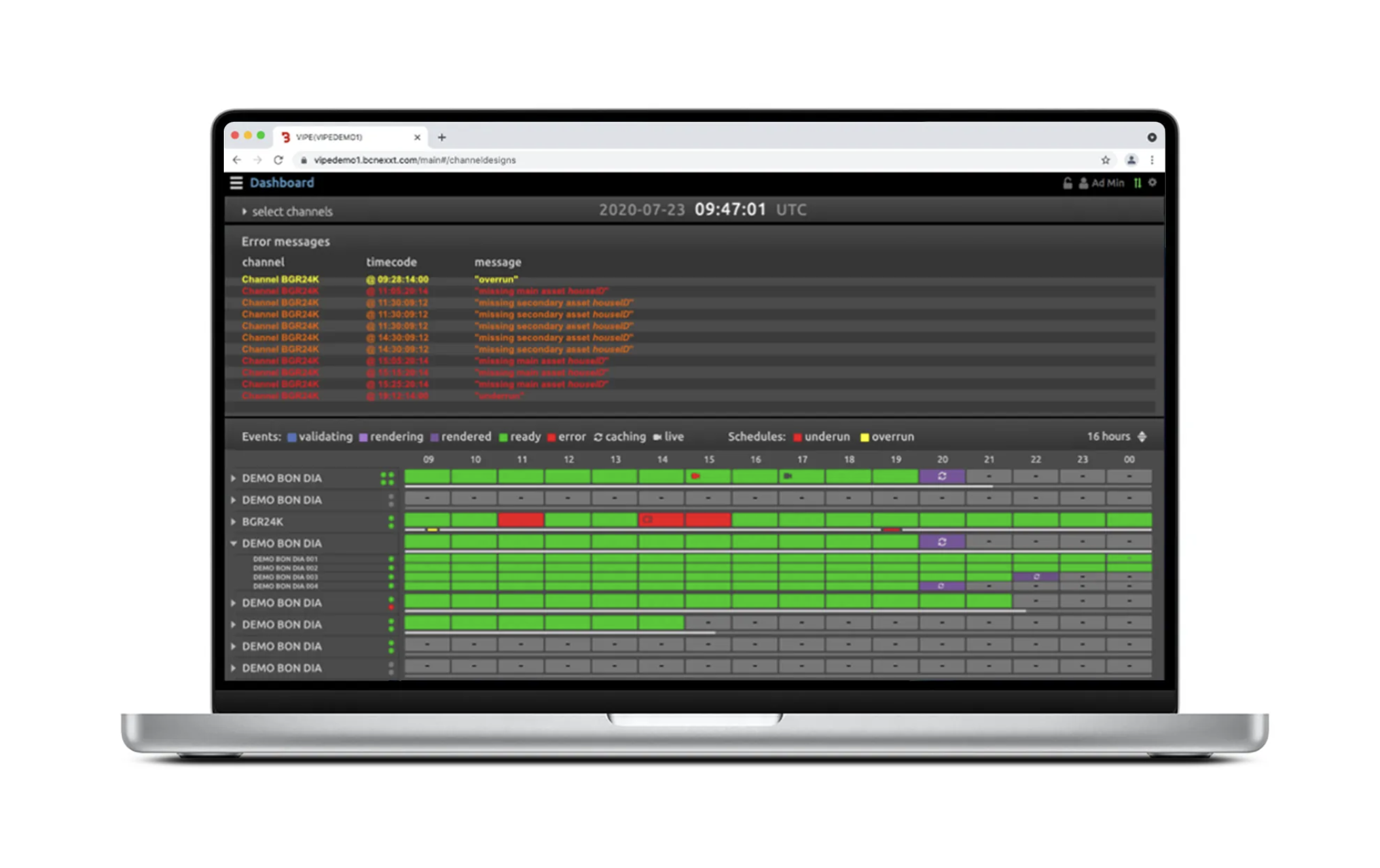
This is a great endorsement of the BCNEXXT strategy and vision! Our playout platform, Vipe, does exactly what technology leaders like Ellison and others are looking for with regards to playout:
- It consolidates silos by creating Linear (including live), Streaming and FAST channels as well as VOD assets from a single content pool and UI and management platform.
- It automates the QC process as well as repetitive tasks, presenting any issues by exception, removing the requirement to eyeball the content live.
- By pre-rending the file-based content ahead of time, tomorrow’s potential problems can be identified during today’s office hours.
- Using machine learning, schedules and content are analyzed, the results driving the deployment of containerized microservices and the infrastructure requirements to support them, on demand. This “only pay for what you play’ philosophy keeps resource costs to a minimum and under strict control.
The results are industry-changing; we have users reporting 60-80% infrastructure reduction, 99.9999% reliability, reduced supply chain complexity, and channel to operator ratios of over 50:1.
These are the kind of efficiencies and savings that the large media companies need to return to profitability and stay competitive, but it does not end there.
BCNEXXT utilizes continuous development and the containerized nature of the software, which means releases are rapidly hardened and made available regularly. These releases are driven by customer feedback, usually based on ways of increasing automation and efficiency, and reducing operator input. Continuous development drives efficiency improvements.
In summary, we believe Ellison and Paramount have laid out a 2026 roadmap that the other media companies must follow, and we at BCNEXXT are well-positioned and ready!
Learn more about Vipe (book a demo).





.jpg)




.jpg)
.jpg)
.jpg)

.jpg)
.jpg)












.jpg)


.png)


